
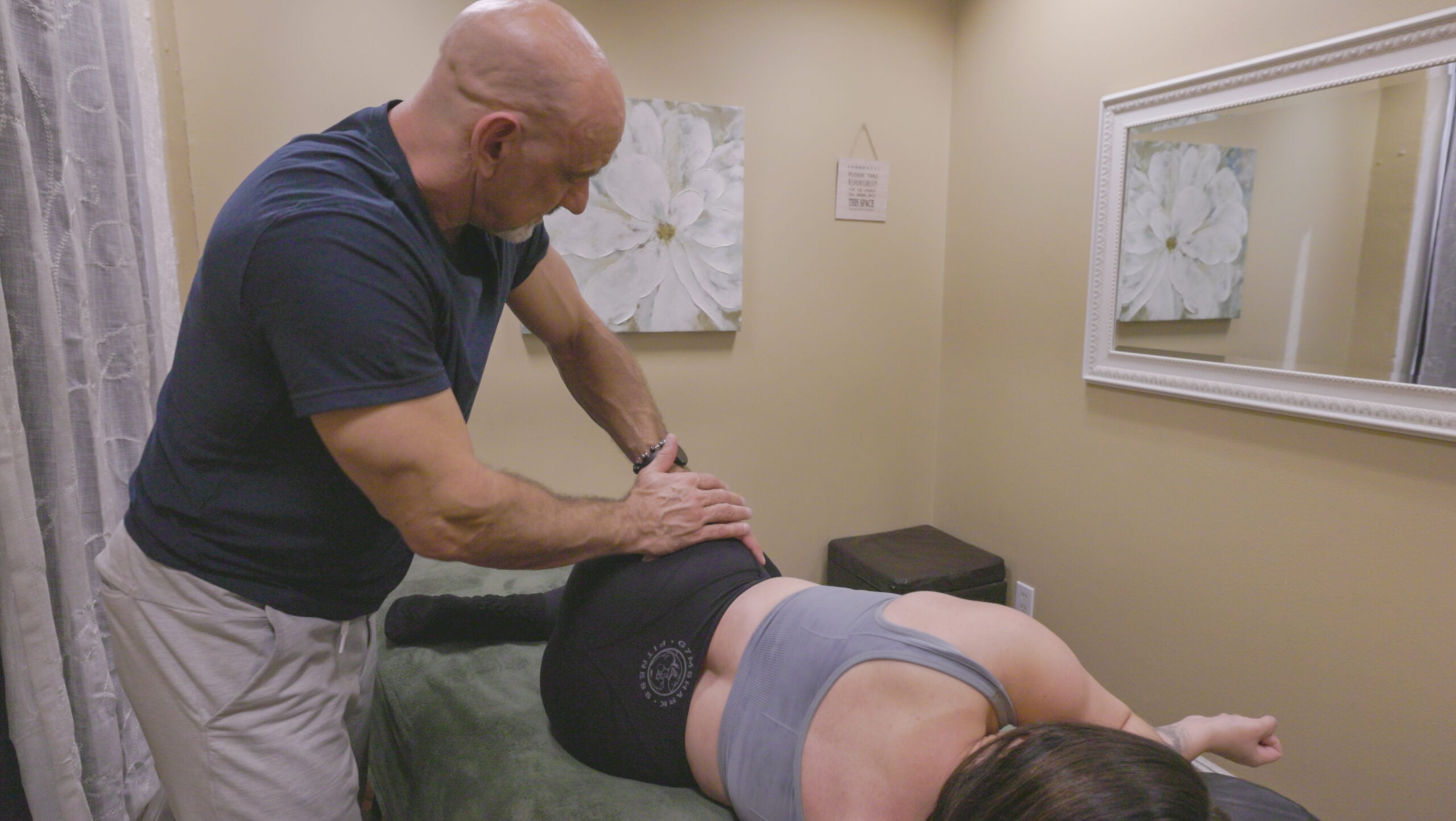
Can Massage Therapy Help Sciatica and Lower Back Pain?
- Massage therapy may provide short-term relief from lower back pain by reducing muscle tension, stiffness, and protective muscle guarding.
- For sciatica, massage may ease discomfort in the lower back, hips, and glutes, but it can’t correct every source of nerve irritation.
- The right approach depends on what is causing the symptoms, especially when pain travels down the leg or includes numbness or weakness.
Are Sciatica and Lower Back Pain the Same Thing?
Sciatica and lower back pain can occur together, but they are not the same. Lower back pain may remain around the lumbar spine, hips, or buttocks, while sciatica typically causes symptoms that travel into one leg.
Sciatica is a symptom of a problem affecting the sciatic nerve or one of the nerve roots that contributes to it. According to the National Library of Medicine’s overview of sciatica, symptoms may include pain, tingling, numbness, or weakness that extends from the lower back into the calf, foot, or toes. Common causes include a herniated disc, spinal stenosis, and certain injuries.
Muscular lower back pain often feels more localized. You may notice soreness, stiffness, tenderness, or discomfort when you bend, lift, or remain in one position for too long.
The distinction is not always obvious. Deep gluteal and hip problems can sometimes produce symptoms that resemble sciatica, while nerve pain may cause the surrounding muscles to tighten protectively. Learning to recognize the difference between nerve pain and muscle pain can help you describe your symptoms more clearly, although a professional assessment may still be necessary.
Can Massage Therapy Help Lower Back Pain?
Massage therapy may reduce pain and improve movement for some people with nonspecific lower back pain, particularly in the short term. It may help relieve muscular tension, reduce stiffness, and make everyday activities feel more manageable.
A Cochrane review of 25 randomized trials involving 3,096 participants found that massage produced short-term improvements in pain and function for people with subacute and chronic lower back pain when compared with inactive controls. However, the researchers rated the evidence as low or very low quality, and the long-term effects were less certain.
That makes massage a potentially useful part of a broader plan rather than a guaranteed solution. By reducing tenderness and muscle guarding around the lower back, glutes, and hips, treatment may make it easier to walk, stretch, exercise, or return to normal activities.
The World Health Organization’s guidance for chronic primary lower back pain includes massage among the physical therapies that may be used. The guidance also emphasizes a personalized combination of education, exercise, physical care, and other appropriate treatments instead of relying on one intervention alone.
Can Massage Therapy Help Sciatica?
Massage may ease some of the muscular discomfort that accompanies sciatica, but its effect depends on what is irritating the nerve. It cannot remove a herniated disc, widen a narrowed spinal canal, or resolve every other possible cause.
When nerve pain develops, the muscles surrounding the lower back, hips, and glutes may tighten to protect the painful area. That guarding can add soreness and stiffness to the original symptoms. Carefully applied massage may reduce this secondary tension, helping you move more comfortably while the underlying problem is assessed or treated.
Massage may be especially useful when muscular tightness is limiting hip movement or making an exercise and rehabilitation program harder to tolerate.
The NICE guidance on lower back pain and sciatica takes a combined-care approach. It advises pairing hands-on treatments such as massage with an exercise program, reinforcing that massage is most useful as one part of recovery rather than a stand-alone treatment for nerve irritation.
What Type of Massage Is Best for Sciatica and Lower Back Pain?
There is no single best massage for every person with sciatica or lower back pain. The appropriate technique depends on where the symptoms begin, how easily they are aggravated, and how your body responds to pressure and movement.
Sports massage therapy may be used to address muscular tension and restricted movement around the hips, glutes, and lower back. Despite its name, this approach is not limited to athletes. It can also be a great option for desk workers, active older adults, and people recovering from repetitive strain.
Myofascial release therapy uses slower, sustained pressure around areas that feel sensitive or restricted. This may suit someone who finds more vigorous massage uncomfortable or whose symptoms respond better to gradual work.
Active Release Techniques combine targeted pressure with guided movement. ART may help address soft-tissue restrictions that affect comfortable movement, although it cannot repair a disc or eliminate a structural source of nerve compression.
Deep tissue and trigger point techniques may also help with localized muscle tension. However, deeper pressure isn’t automatically more effective. When nerve symptoms are acute or easily irritated, a gentler and more cautious approach may be more appropriate.
Can Massage Make Sciatica Worse?
Massage can temporarily aggravate sciatica when the pressure is too intense, the treatment position irritates the nerve, or a technique repeatedly reproduces radiating symptoms.
Massage shouldn’t require you to push through sharp, burning, electrical, or shooting pain. Tell your therapist immediately if pain begins travelling farther down the leg, numbness or tingling increases, or pressure produces an electrical sensation.
Some muscular tenderness during targeted treatment can occur, but worsening neurological symptoms are different. Treatment should be adjusted or stopped rather than treating increased nerve pain as a sign that the technique is working.
When Should You See a Doctor Instead of Booking a Massage?
Medical evaluation should come first when sciatica symptoms include significant numbness, progressive weakness, rapidly worsening pain, or changes in bowel or bladder control.
Seek urgent medical care if you experience:
- New bowel or bladder problems
- Numbness around the groin or inner thighs
- Sudden or increasing leg weakness
- Foot drop or difficulty controlling the leg
- Severe symptoms following a fall or injury
- Fever, signs of infection, or severe unexplained pain
Persistent pain travelling down the leg should also be assessed when the cause has not been established. Massage therapists can work with muscular tension and soft-tissue restrictions, but they don’t replace medical diagnosis or treatment for a serious neurological problem.
What Can You Expect From a Targeted Massage Session?
A targeted massage session should begin with a conversation about where the pain starts, where it travels, what aggravates it, and whether a healthcare professional has evaluated the symptoms.
At FixingPain Clinic, we may also look at how your lower back, hips, and legs move before deciding which techniques to use. Treatment can then be adjusted according to what your body tolerates, rather than following the same deep-tissue routine for every client.
With more than 25 years of hands-on experience, we work with clients in Pleasanton and throughout the East Bay and Bay Area. Depending on what we find, a session may incorporate sports massage, ART, and other techniques. If the symptoms suggest that massage is not appropriate, further medical evaluation may be recommended.
You can also explore the clinic’s broader approach to sciatica pain treatment and the other forms of care that may accompany targeted massage.
Massage Can Be Part of the Plan
Massage therapy may help manage muscular lower back pain and reduce some of the tension that accompanies sciatica. The results depend on the source of the symptoms, which is why the most useful plan may also include medical assessment, exercise, rehabilitation, and changes to the activities aggravating the pain.
If lower back or leg pain is making it difficult to sit, walk, train, or sleep comfortably, we can assess the soft-tissue and movement factors that may be contributing. Book a personalized session at FixingPain Clinic in Pleasanton and let’s fix pain together.