
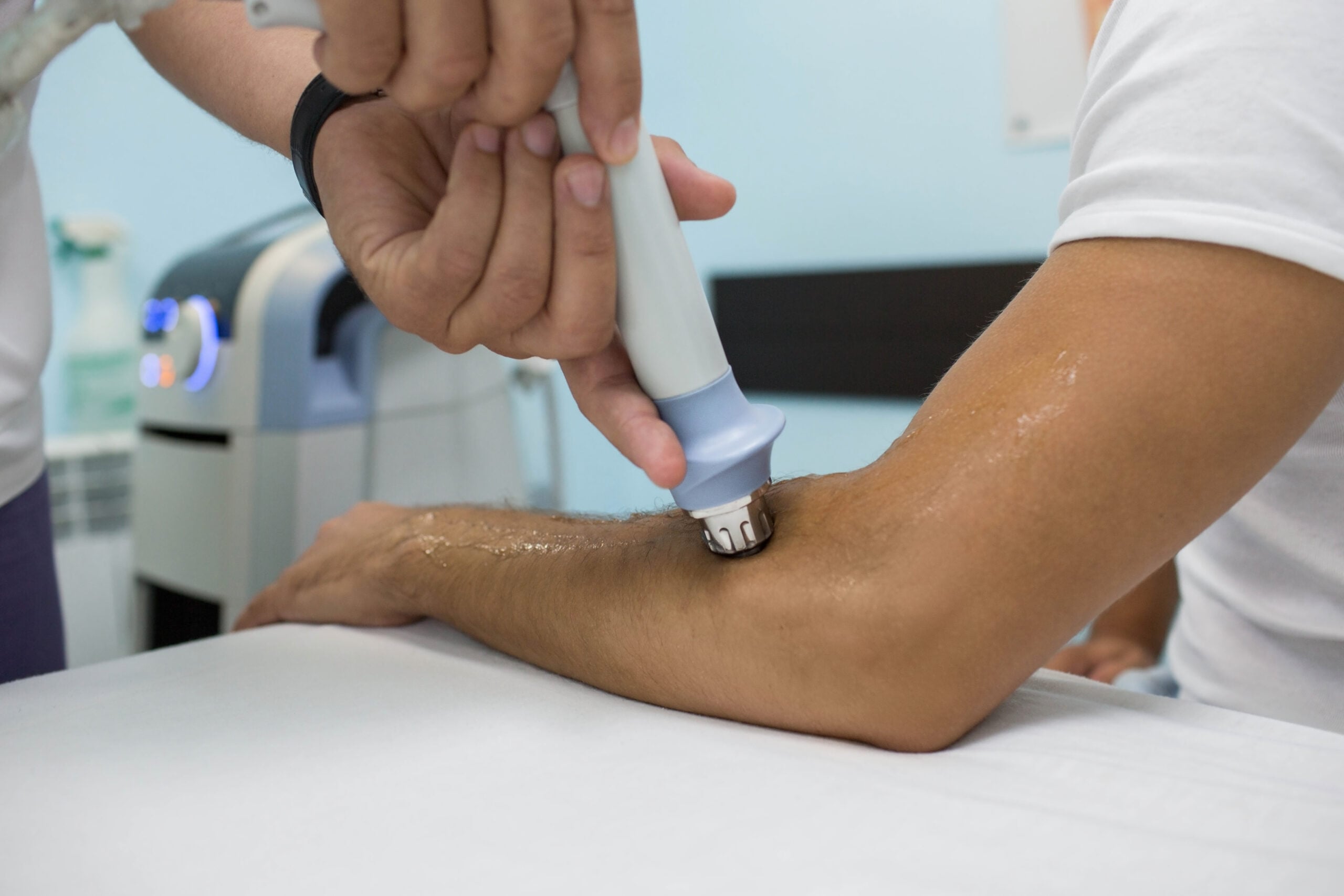
Does Shockwave Therapy Work for Elbow Tendonitis?
- Shockwave therapy can help elbow tendonitis by reducing pain and improving tendon healing, especially in chronic cases like tennis elbow.
- It works by stimulating tissue repair and helping the tendon handle daily activities like typing, gripping, and lifting with less irritation.
- Results are best when combined with a treatment plan that addresses the repetitive strain causing the problem, not just the pain itself.
What Is Elbow Tendonitis and Why Does It Happen?
Elbow tendonitis is a common condition that affects the tendons on the outside of the elbow, most often referred to as tennis elbow. Despite the name, it doesn’t just happen to athletes. In fact, many cases stem from everyday, repetitive use rather than from sports.
These tendons help control wrist movement and grip strength. Every time you type, use a mouse, lift something, or even hold your phone, those same tissues are working. When that load is repeated over and over without enough recovery, the tendon can become irritated and sensitive.
Over time, it’s less about one big injury and more about small, repeated strain that the body doesn’t fully recover from.
That’s why elbow tendonitis often shows up in people who:
- Work long hours at a computer
- Use a mouse or trackpad frequently
- Perform repetitive hand or wrist movements
- Grip tools, weights, or objects regularly
The pain usually develops gradually. It might start as a mild ache on the outside of the elbow, then turn into sharp discomfort when gripping, lifting, or even shaking someone’s hand.
The frustrating part is that rest can calm it down temporarily, but once you go back to the same daily activities, the pain often returns.
Can Computer Work Really Cause Elbow Pain?
Elbow tendonitis isn’t always caused by sports or heavy lifting. It often comes from repetitive, low-level strain that builds up over time, and computer work is a perfect example of that.
Think about how many times a day you:
- Click a mouse
- Grip it without realizing
- Type for long stretches
- Hold your wrist in the same position
Individually, none of those activities feels like a big deal. But over hours and days, that constant use loads the same forearm muscles and tendons again and again, especially the ones that attach to the outside of the elbow.
The problem isn’t just movement. It’s a lack of variation and recovery.
When your arm stays in similar positions for long periods, those tissues don’t get a chance to fully relax. Add in factors like a poor desk setup, a tight grip on the mouse, minimal breaks, and stress (which increases muscle tension), and it’s easy to see how irritation can build up.
How Does Shockwave Therapy Work for Elbow Tendonitis?
Shockwave therapy works by sending targeted acoustic waves into the irritated tendon on the outside of the elbow. That energy creates a mechanical signal in the tissue, which tells your body that the area needs to be repaired.
In simple terms, it helps “wake up” a tendon that has been stuck in a slow, incomplete healing cycle.
With elbow tendonitis, the issue is often not just inflammation. Over time, the tendon can become overloaded and less responsive, especially when the same movements keep irritating it day after day. That’s why resting alone doesn’t always fix the problem.
Shockwave therapy helps change that environment by:
- Improving circulation to the affected area.
- Stimulating cellular activity involved in tissue repair.
- Reducing sensitivity in irritated tissue over time.
As the tendon starts to respond, people often notice that gripping, typing, or lifting feels less sharp or restrictive. Movement becomes easier, and the tissue can handle daily use with less irritation.
What Does the Research Say About Shockwave Therapy for Tennis Elbow?
Research on shockwave therapy for tennis elbow is promising, especially for people dealing with chronic elbow pain that has not improved with basic rest, stretching, or standard care.
A 2020 systematic review and meta-analysis looked at 13 randomized controlled trials with 1,035 patients and found that shockwave therapy significantly improved pain scores and grip strength in people with lateral epicondylitis, the medical term for tennis elbow. The authors concluded that shockwave therapy can help relieve pain and functional impairment, though they also noted that more high-quality studies are still needed.
A 2024 systematic review comparing shockwave therapy with corticosteroid injections found that injections worked better in the short term at one month, but shockwave therapy performed better at three and six months for pain relief, grip strength, and function. That matters because many people with elbow tendonitis want longer-term improvement, not just a quick drop in pain that fades later.
A 2025 systematic review and meta-analysis comparing shockwave therapy with ultrasound therapy found that shockwave therapy produced greater pain reduction in people with lateral epicondylitis, although functional improvement was less clear and the authors called for more high-quality trials.
How Many Shockwave Sessions Does Elbow Tendonitis Usually Need?
For elbow tendonitis, it’s common to start with 3 to 6 shockwave sessions, spaced about once per week. This gives the tendon time to respond between treatments while gradually building a stronger healing response.
You usually won’t see the full effect after the first visit. What most people notice first is that gripping feels a little easier, the elbow is less sore the next day, and daily tasks like typing or lifting feel less sharp.
Then over the next few weeks, those small improvements start to add up.
How many sessions you need depends on a few key factors:
- How long the pain has been there (chronic cases take longer)
- How irritated the tendon is
- How much daily strain is still going into the area (like computer work or lifting)
Some people feel a clear improvement within a few sessions. Others need a longer plan, especially if the elbow keeps getting stressed the same way every day.
The goal isn’t just to reduce pain during treatment, but to help the tendon recover enough to handle normal use again without flaring up.
Who Is a Good Candidate for Shockwave Therapy for Elbow Tendonitis?
Shockwave therapy is usually a great option for people dealing with stubborn, recurring elbow pain that hasn’t fully improved with basic treatments.
You may be a good candidate if you:
- Have pain on the outside of the elbow when gripping, lifting, or using a mouse.
- Notice symptoms that keep coming back after rest or time off.
- Work long hours at a computer and feel forearm tightness or fatigue.
- Have tried stretching, bracing, or massage, but still feel limited.
- Want a non-invasive option before considering injections or surgery.
- Need to keep using your arm for work, workouts, or daily tasks.
FAQs
Does shockwave therapy work for tennis elbow?
Yes, shockwave therapy can help reduce pain and improve function in people with tennis elbow, especially when symptoms are chronic. Research shows it may support tendon healing and provide longer-term relief compared to some short-term treatments, particularly when combined with proper loading, movement changes, and soft tissue work.
Is shockwave therapy good for elbow tendonitis from computer work?
Yes, shockwave therapy can help elbow tendonitis caused by repetitive computer use by reducing tendon irritation and improving the tissue’s ability to handle load. It works best when combined with changes to daily strain, like grip habits, posture, and movement patterns, so the tendon isn’t constantly re-irritated.
How many shockwave therapy sessions do you need for tennis elbow?
Most people start noticing improvement within a few sessions, often as reduced soreness during daily activities like typing or gripping. More meaningful changes typically build over several weeks as the tendon adapts and heals. Recovery speed depends on how long symptoms have been present and how much strain continues during daily use.
Does shockwave therapy hurt?
Shockwave therapy can feel uncomfortable in sensitive areas, especially at the start, but it’s usually well tolerated. The intensity is adjusted to your comfort level, and most people describe it as a strong, focused sensation rather than sharp pain. Any discomfort typically fades quickly after the session.
A Smarter Way to Treat Elbow Tendonitis
Elbow tendonitis doesn’t usually come from one moment. It builds over time from repetitive strain, especially with things you can’t just stop doing, like working at a computer.
Shockwave therapy gives you a way to address the irritated tendon while still living your life. It helps the tissue recover, reduces pain, and improves how your elbow handles daily use. When it’s combined with the right treatment plan, it can make a big difference in how quickly and how fully you recover.
If your elbow pain keeps coming back, it’s a sign the problem hasn’t been fully resolved yet.
At FixingPain Clinic, treatment is built around how your body moves and what’s causing the strain in the first place. Shockwave therapy is often combined with hands-on treatment and practical changes so your elbow can heal and stay that way.